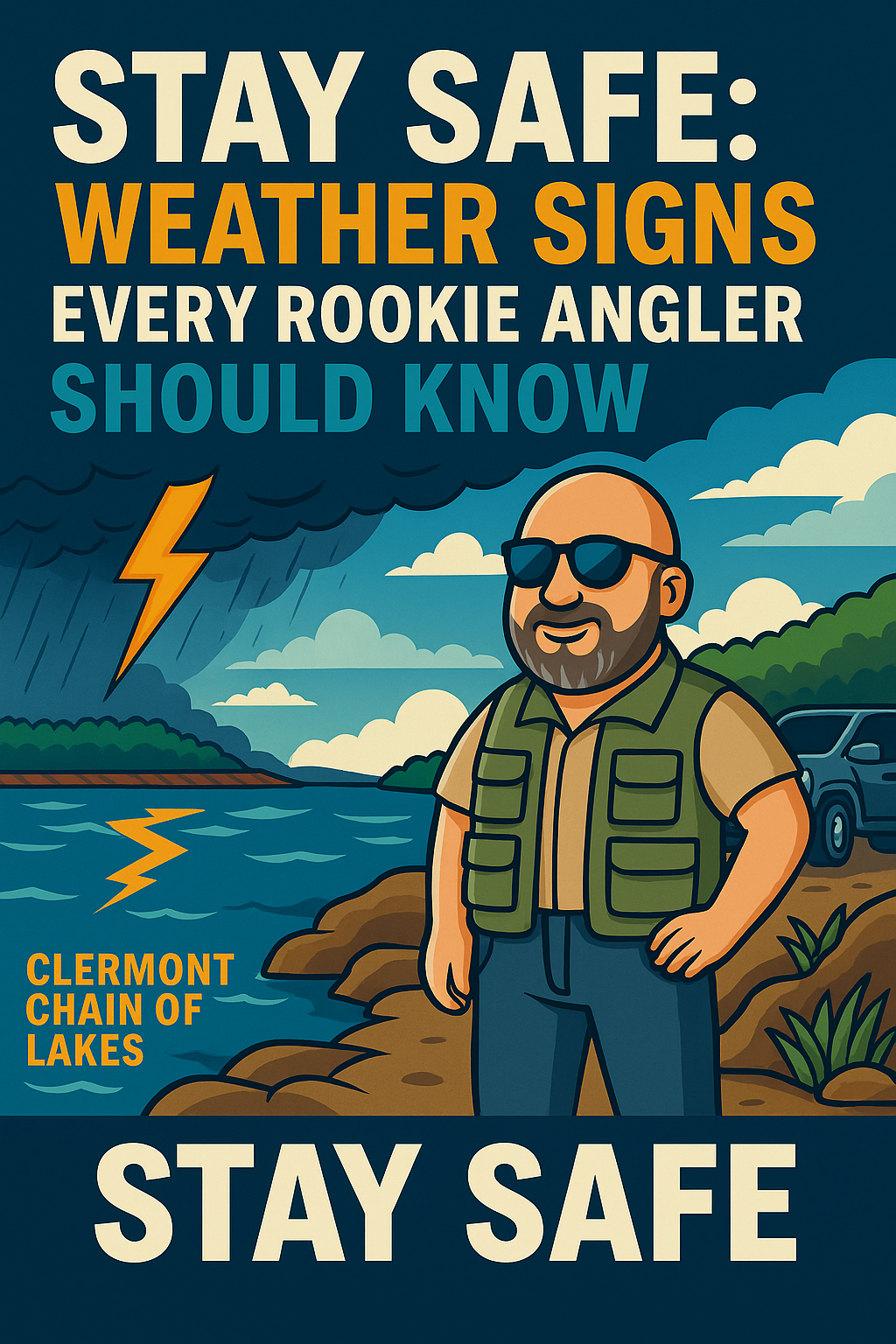
If you spend enough weekends on the water, you know this as truth: the weather can turn on you fast. One minute it’s glassy calm, the next you’re racing dark clouds back to the ramp.
Apps and forecasts are helpful. Learning to “read the water” (and sky) can give you an early warning. This is useful when storms are moving in. Here’s what every rookie angler should look for.
1. 🌊 Watch the Water’s Texture
- Chop Building Fast → If the wind picks up and ripples turn to whitecaps quickly, a front is pushing in.
- Current Changes → Shifts in tide or current speed can mean weather is influencing water flow.
👉 Rookie tip: Calm water turning rough in minutes → get alert.
2. ☁️ Check the Clouds
- Tall, Puffy Clouds Growing Dark (Cumulonimbus) → Classic thunderstorm sign. If you see anvil-shaped tops, it’s time to head in.
- Low, Fast-Moving Clouds → Means the storm is close and moving quickly.
👉 Rookie tip: Rule of thumb: dark clouds building in the west often mean incoming storms in Florida.
3. 🌬 Feel the Wind
- Sudden shifts in direction or temperature drops = storm outflow.
- Gusts ahead of the rain are the storm’s calling card.
👉 Rookie tip: If the wind swings fast, the storm’s near.
4. 🔊 Listen for Distant Thunder
If you can hear thunder, even faintly, you’re within striking distance of lightning (10+ miles).
👉 Rookie tip: That’s your cue to play it safe.
5. ⚡ Watch Wildlife
- Birds disappear from open skies before storms.
- Fish feed aggressively right before pressure drops.
- Insects vanish when wind kicks up.
👉 Rookie tip: Nature gives clues long before radar does.
⚓ Final Cast
Fishing is fun. Boating is freedom. But neither is worth gambling against Florida’s summer storms.
- Keep an eye on the water, sky, and wind.
- Always have a “Plan B” ramp or safe harbor nearby.
- And when in doubt, head in early.

👉 Rookie tip: Remember, the fish will still be there tomorrow.
Leave a Reply